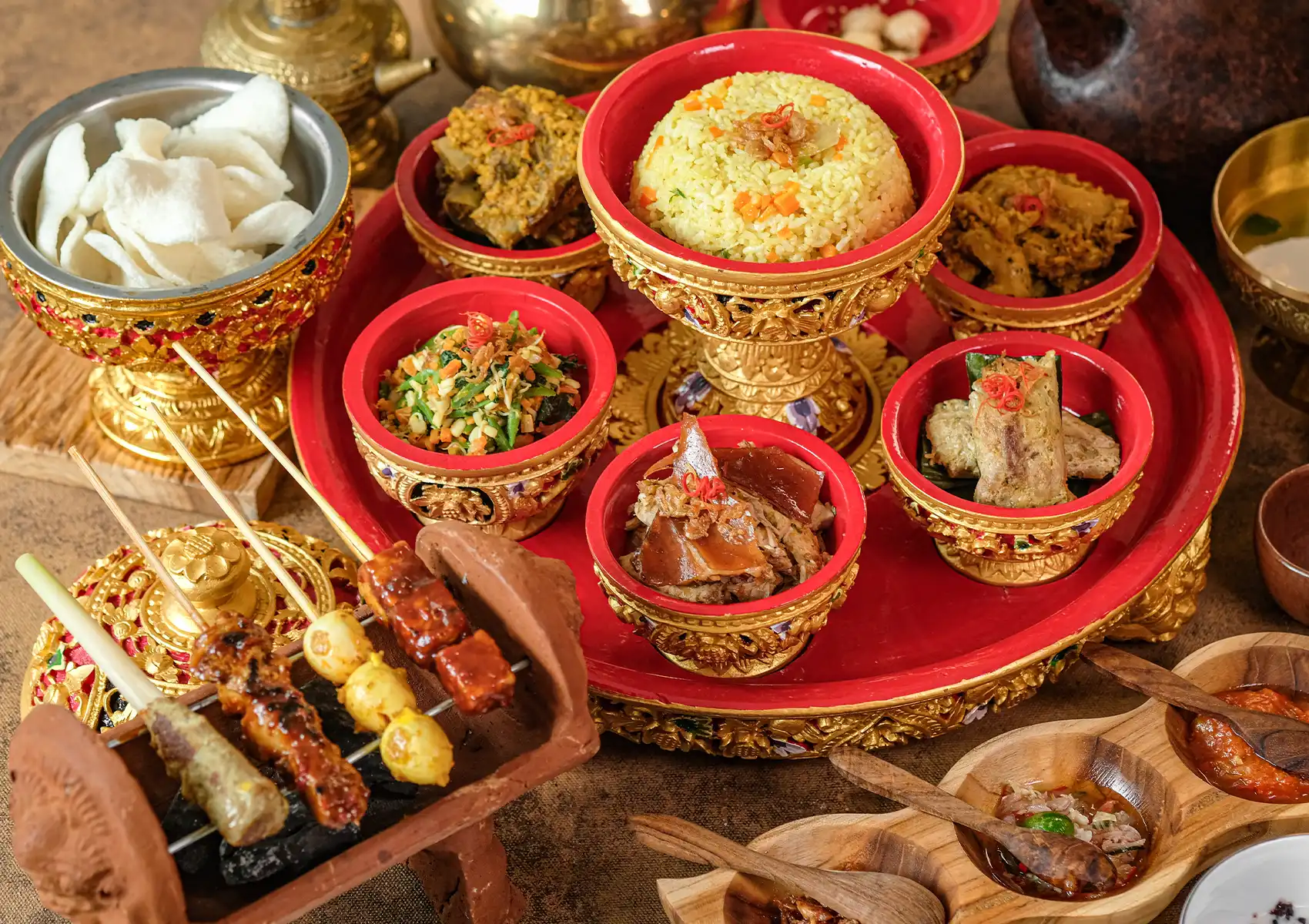
Babi Guling and the Balinese Feast Tradition
Babi Guling has a place in Bali that goes beyond the plate. The whole roasted pig is closely associated with ceremonies, celebrations and communal gatherings, including weddings and other important occasions. It is also enjoyed as everyday food, but its connection with Balinese ceremony helps explain why the dish carries such cultural weight.
At CasCades Restaurant & Bar, Babi Guling appears as part of the Balinese Rijsttafel, a sharing menu that brings several Balinese dishes to the table together. Understanding that context makes the dish more interesting than treating it simply as another pork main.
Why Pork Is So Important in Bali
Pork has a distinctive place in Balinese cuisine, particularly within a predominantly Hindu society where it features in many traditional dishes and ceremonial meals.
Indonesia has a Muslim majority, and pork is avoided in Islamic dietary practice. Bali’s Hindu traditions have developed within a different cultural and religious setting, allowing pork to become an established part of local cuisine.
That is one reason Babi Guling is so strongly identified with Bali. The dish is not simply an Indonesian version of another roasted-pork tradition. It developed within Balinese food culture and is closely connected to the island’s ceremonies, community gatherings and culinary practices.
At the same time, Balinese cuisine is much broader than pork. Rice, vegetables, seafood, chicken, duck, spices and sambal all have important roles across the island’s cooking.
What Gives Babi Guling Its Character
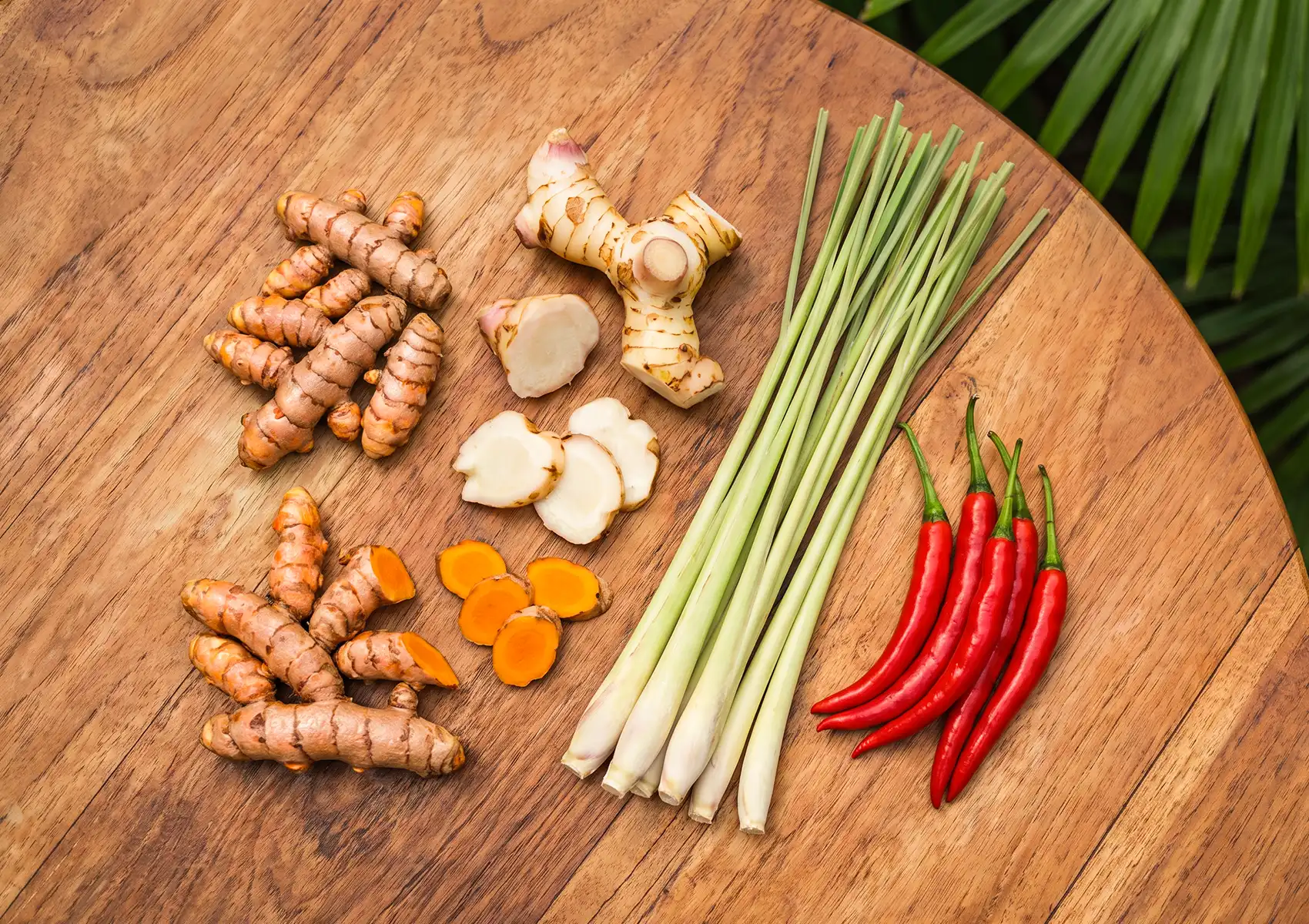
Spice is central to the flavour of traditional Babi Guling.
Balinese cooking often uses base genep, a complex spice mixture that can include ingredients such as turmeric, galangal, lemongrass, shallots, garlic, chilli, coriander seed and candlenut. The exact combination varies between recipes, households and regions.
In traditional Babi Guling preparation, the spice mixture is used to season the pig before it is roasted. The result is a combination of aromatic meat and crisp skin, with the spices providing much of the flavour associated with the dish.
The skin is particularly prized for its crisp texture. It is one of the elements that makes Babi Guling different from a simple roast pork dish.
How It Reaches the Table at CasCades Restaurant & Bar
This is the practical part to know before ordering.
Babi Guling is not available as an individual lunch or dinner main at CasCades Restaurant & Bar. Instead, it is included in the Balinese Rijsttafel, a sharing menu designed for two.
The menu brings together nine dishes, including Babi Guling alongside other Balinese preparations such as Bebek Betutu, Babi Menyat-nyat, Ayam Pelalah, Sate Be Pasih, Pepes Ikan, Cumi Suna Cekuh, Nasi Kuning and Jukut Urab.
That combination is part of the appeal. Rather than approaching Babi Guling as a standalone dish, the Rijsttafel lets you experience it alongside several other flavours and cooking techniques from Balinese cuisine.
It is a restaurant interpretation of a shared feast, designed to give diners a broader taste of the island’s food traditions in one sitting.
Two Pork Dishes on One Menu
The Rijsttafel includes two distinctly different pork preparations: Babi Guling and Babi Menyat-nyat.
Babi Guling is associated with roasted pork and crisp skin, while Babi Menyat-nyat is a braised preparation in which the meat is cooked with spices and liquid.
Having both on the same table makes the contrast particularly easy to appreciate. The same broad culinary tradition can produce two very different textures and flavours depending on the cooking method.
Both are clearly identified as pork dishes on the menu, which is useful for guests who need to avoid pork or simply want to know exactly what they are ordering.
Monday Adds Balinese Dance
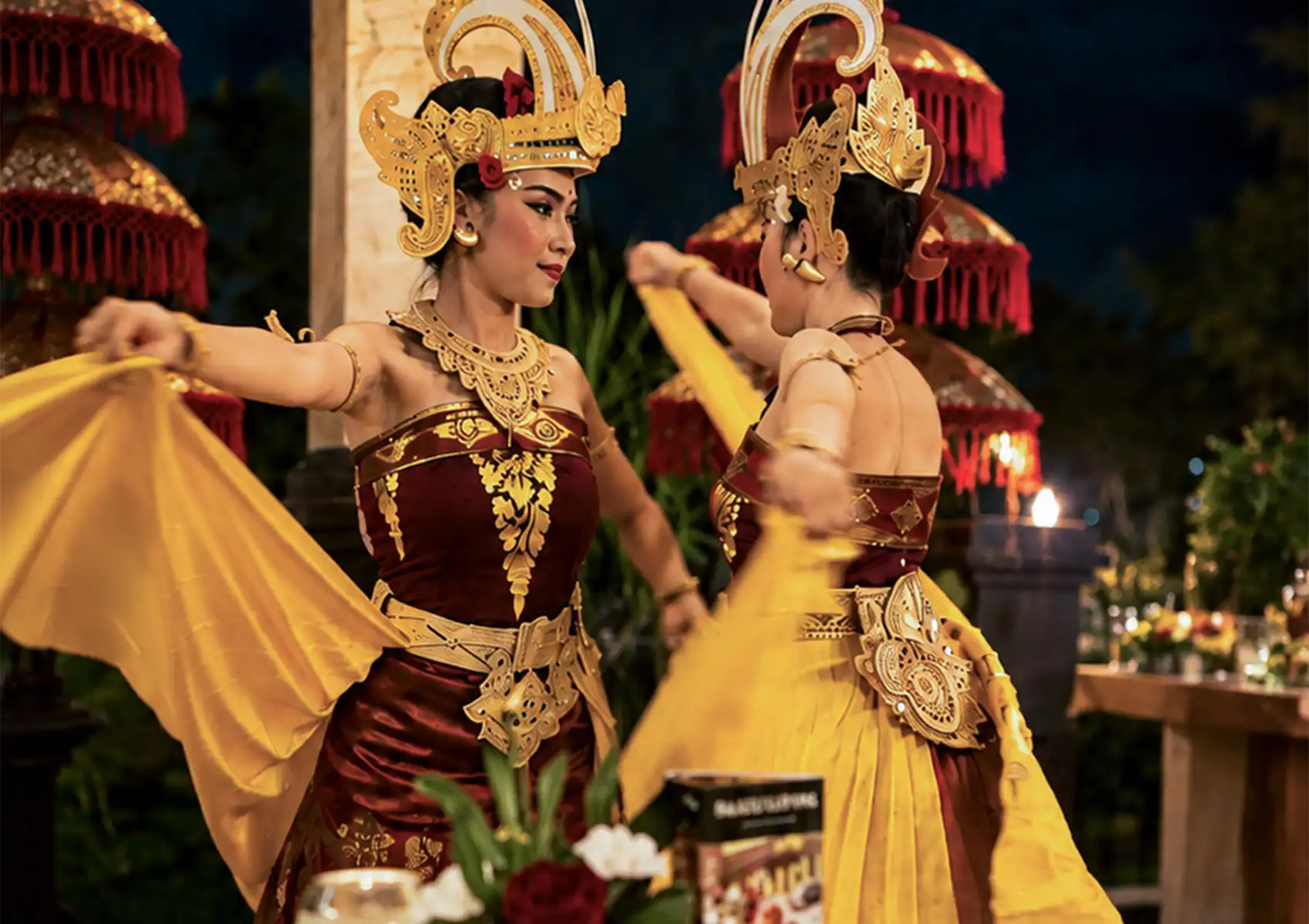
If you want to pair the meal with a Balinese performance, Monday evening is the night to consider.
Balinese dance takes place every Monday from 7.30 PM, with guests able to watch from their dining tables. The Rijsttafel is paired with the evening, creating an opportunity to experience several elements of Balinese culture in one setting.
Balinese dance encompasses many different forms, with performances connected to both religious and cultural traditions. At CasCades Restaurant & Bar, the performance takes place alongside dinner rather than requiring guests to travel elsewhere for a separate show.
The combination of a shared Balinese meal and Balinese dance also makes Monday a natural choice for visitors who want to experience more of the island’s culture during their stay.
How to Approach the Rijsttafel
A Rijsttafel is best enjoyed at an unhurried pace.
The dishes arrive as a shared spread rather than as a sequence of courses, so there is no need to finish one plate before moving to another. Rice provides the base for many of the dishes, while sambal and other accompaniments can be added according to your preference for heat.
With nine dishes on the table, sharing is part of the experience. Try a little of everything first, then return to the flavours you enjoy most.
And if you enjoy pork, pay attention to the Babi Guling skin. Its crisp texture is one of the defining pleasures of the dish.
Experiencing Babi Guling in Ubud
A restaurant cannot recreate the atmosphere of Babi Guling prepared for a Balinese ceremony within a family or community setting, and it should not claim to.
What a restaurant can offer is another way to encounter the dish: as part of a broader Balinese meal, alongside other local preparations and in a setting where you can take your time with the food.
CasCades Restaurant & Bar serves the Balinese Rijsttafel as a sharing experience, with reservations available through WhatsApp or email. If you would like to experience it alongside Balinese dance, Monday evening is the regular performance night.
For visitors interested in Balinese food in Ubud, the Rijsttafel offers a chance to try Babi Guling as part of a wider meal rather than encountering it in isolation.