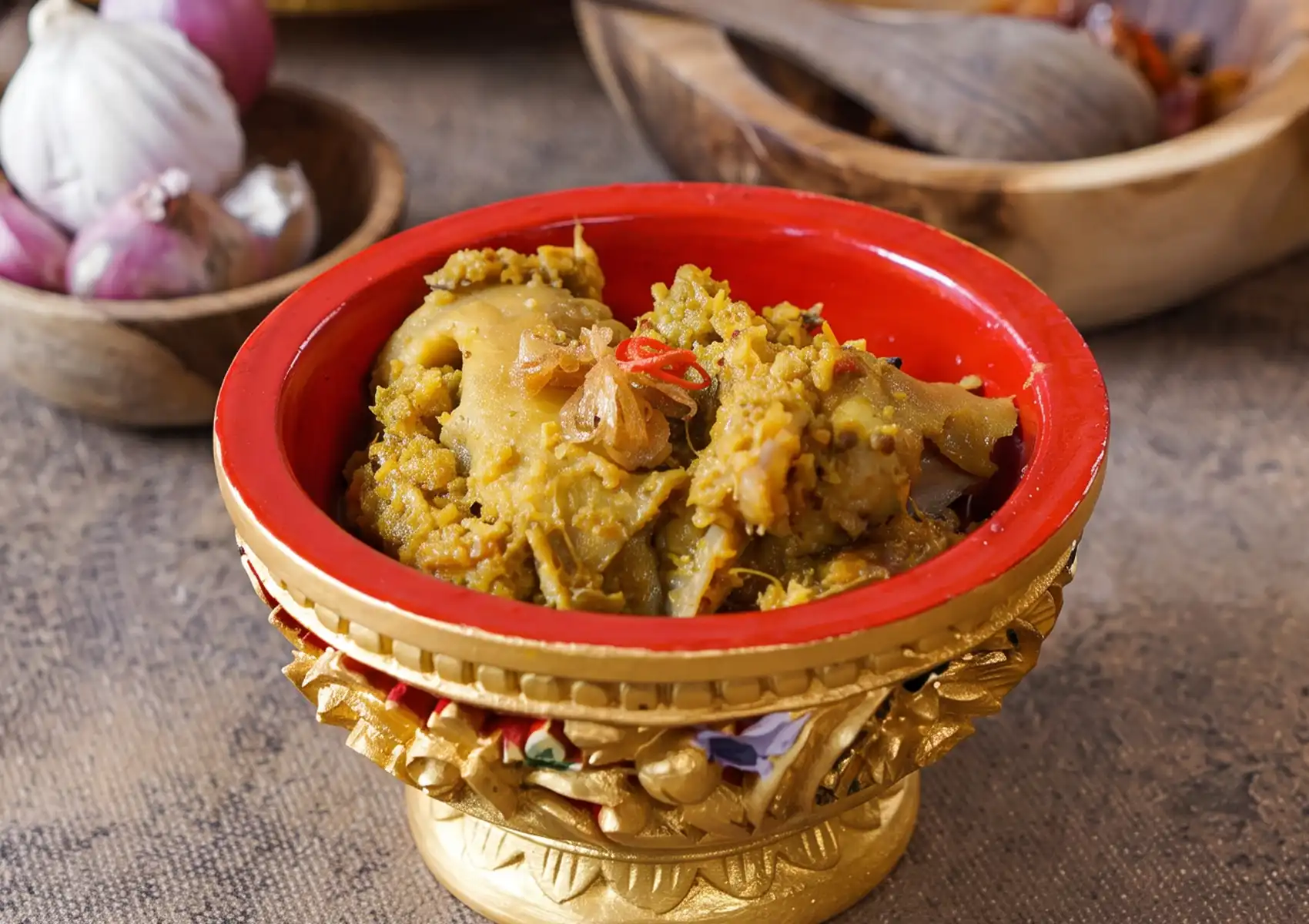
Bebek Betutu in Balinese Occasion Cooking
Bebek Betutu was being wrapped, spiced, and slow-roasted across Bali long before it appeared on printed menus. Its journey from ceremonial village kitchens to the tables of a restaurant in Ubud reflects how Balinese cuisine has long been shared through celebration, tradition, and communal dining. Understanding that history is what turns an order of Bebek Betutu into something closer to participation than consumption.
What Is Bebek Betutu?
Bebek Betutu is one of Bali’s best-known traditional dishes, prepared by coating a whole duck with bumbu betutu, a richly layered Balinese spice paste, before slow-cooking it for many hours until the meat becomes exceptionally tender. Long associated with ceremonies and celebrations, it reflects the patience and care that define much of Balinese cooking.
The heart of the dish is the spice paste. Built from ingredients such as galangal, turmeric, lemongrass, shallots, garlic, candlenuts, ginger, and chillies, bumbu betutu gives the duck its deep aroma and complex flavour. Recipes differ from one family to another and from one village to another. It makes every version a reflection of local traditions and personal technique.
Traditionally, the seasoned duck is wrapped in banana leaves and cooked slowly over gentle heat. Historically, seasoned duck was cooked over wood fires, embers, or rice husks. Rather than relying on high heat, this method allows the spices to infuse the meat gradually, creating a dish that is fragrant, succulent, and tender enough to fall off the bone.
Because of the time and preparation involved, Bebek Betutu has long been reserved for temple festivals, family ceremonies, and other special occasions. Today, it remains one of Bali’s most celebrated dishes, offering visitors a taste of the island’s culinary heritage and its enduring tradition of cooking for gatherings that bring people together.
The Ceremonial Table Behind the Dish
Few dishes are as closely tied to Balinese ceremony as betutu. To appreciate what arrives on the plate, it helps to understand the kind of table it was made for.
Balinese feasting has always upheld a tradition of abundance. On days of temple anniversaries and family rites, multiple dishes arrive together, each balancing spice, protein, vegetable, and sauce, with rice at the ceremonial centre. Betutu preparations sat at the top of that hierarchy precisely because they demanded so much time and care. A dish that takes the better part of a day to cook is, by its nature, a dish of intention.
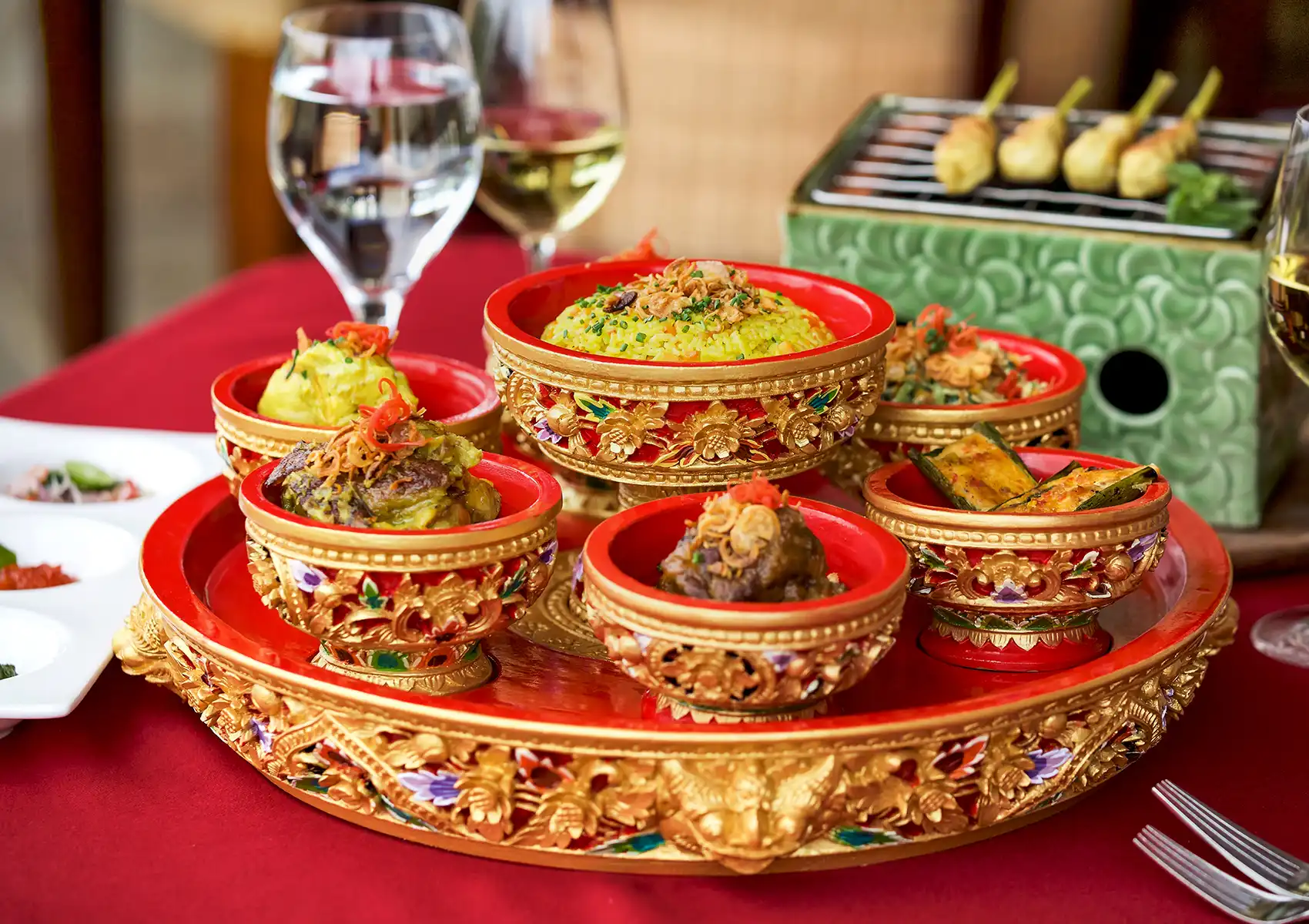
While Rijsttafel originated during the Dutch colonial period as a way to showcase the diverse cuisines of the Indonesian archipelago, many restaurants in Bali now use the format to present traditional Balinese dishes in a shared meal. At a restaurant in Ubud, Bebek Betutu often takes pride of place within this generous spread, accompanied by rice, vegetables, sambals, and other regional specialities.
Although the dining format itself is not traditionally Balinese, it provides an inviting way to experience the island’s culinary heritage in a single sitting. Those curious about the deeper roots of these flavours can explore our guide to traditional Balinese cooking through the ages, where the betutu cooking method remains one of Bali’s oldest culinary traditions.
What to Look for in a Bebek Betutu Worth Your Evening
Not every betutu is built with the same conviction. The dish rewards kitchens that respect its timeline, and the difference is evident from the first bite.
Begin with tenderness. Properly prepared Bebek Betutu should yield without resistance, the meat pulling cleanly from the bone. Firmness in the flesh suggests the cooking was hurried, and hurry is the one thing this dish cannot forgive.
Then consider the spice. The bumbu should read as depth rather than surface heat, with the earthiness of galangal and turmeric arriving before the chilli does. A well-made paste penetrates the meat entirely, so that the final forkful tastes as complete as the first. Aroma tells you the rest. Betutu announces itself before it is tasted, and a plate that arrives fragrant with lemongrass and roasted aromatics is a plate that was given its time.
Finally, look at the company the duck keeps. Betutu is a dish of the shared table, and it shows best surrounded by the contrasts of a full Balinese spread, bright fruit, fresh sambal, cooling vegetables, and fragrant rice.
Experiencing Bebek Betutu at CasCades, A Restaurant in Ubud
There are few settings where a ceremonial dish feels genuinely at home. CasCades Restaurant & Bar, perched above the Valley of the Kings within Viceroy Bali, is one of them.
Seated on the open terrace with the jungle canopy spread wide below and the Petanu River sounding faintly from the valley floor, the setting at this restaurant in Ubud does something few dining rooms manage. It restores the sense of occasion the dish was born from. The surroundings are not decorative. They are part of the meal.
At CasCades Restaurant & Bar, Bebek Betutu arrives as roasted duck with bumbu betutu, holding the centre of the Balinese Rijsttafel, the shared Indonesian tasting menu with an optional wine pairing. The duck is accompanied by a selection of traditional Balinese dishes. Rujak opens the table with tropical fruit and palm sugar. Kuah Be Pasih is followed by barramundi, prawns, and local scallops. Then come the mains in sequence: grilled Pepes Ikan in Bumbu Bali, baby squid in coconut milk, the famed Sate Be Pasih fish satay, braised pork ribs in sweet soy sauce, Babi Guling with its crispy skin, and Ayam Pelalah brightened with sambal matah, all gathered around fragrant Nasi Kuning and traditional vegetable accompaniments before a selection of Balinese desserts closes the meal.
The pacing is deliberate. This is not a meal that rushes towards a conclusion. It is one that is allowed to breathe, unfolding across a long sitting as the light shifts golden over the valley.
A Table Worth Reserving
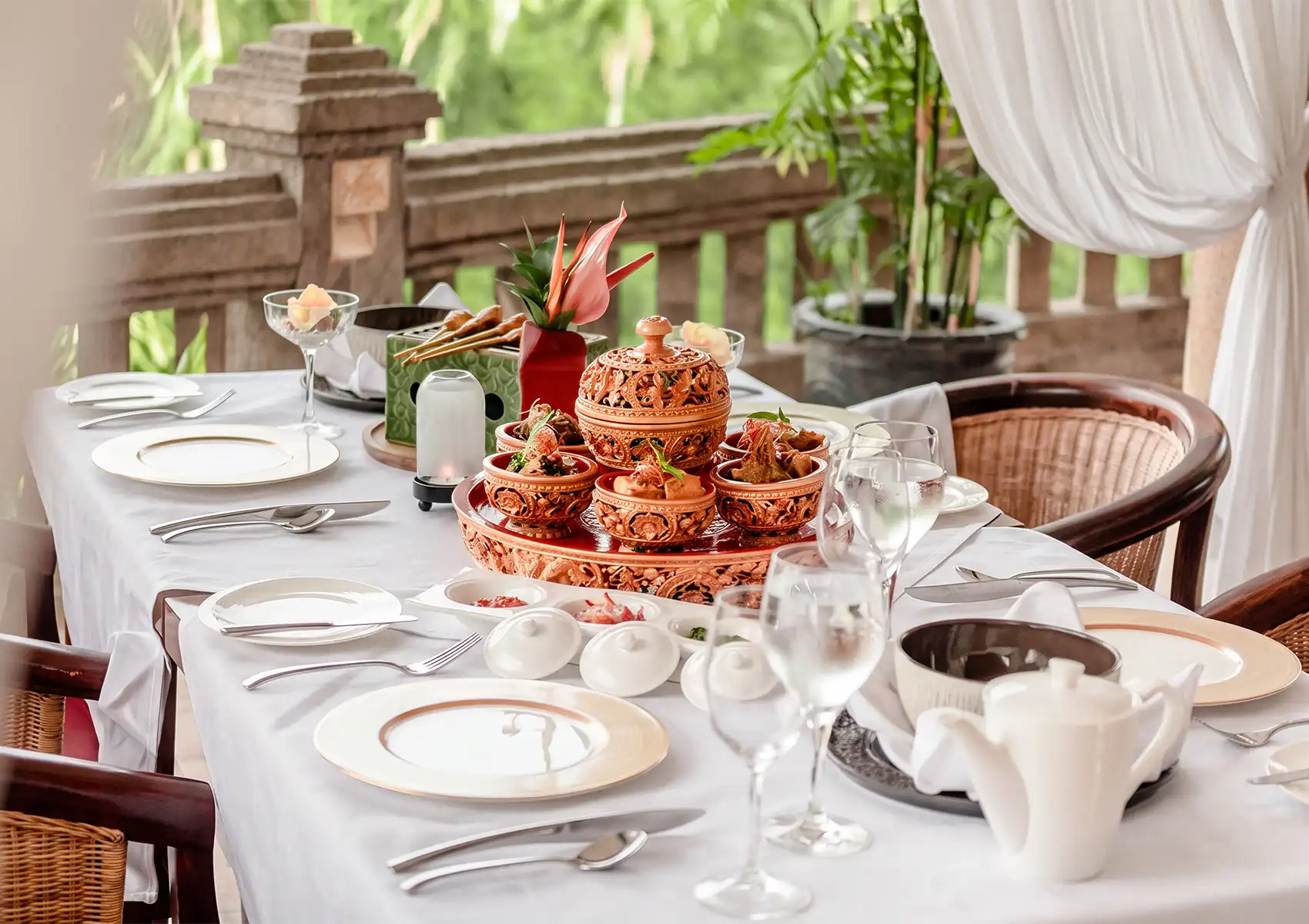
Balinese culinary traditions are not a backdrop. It is the reason to be at the table. At this restaurant in Ubud, Bebek Betutu is treated as the layered ceremonial tradition it is, not simply a line on a printed menu. If you are ready to meet the island’s most patient dish on its own terms, browse the menu and reserve your table.
Let the slow-roasted centrepiece of the Rijsttafel set the rhythm of your evening.
CasCades Restaurant & Bar is open daily from 11 AM to 9 PM at Jalan Lanyahan, Banjar Nagi, Ubud.
Frequently Asked Questions
What is Bebek Betutu made of?
Bebek Betutu is duck rubbed generously with bumbu, a Balinese spice paste of aromatics such as galangal, turmeric, lemongrass, shallots, garlic, and candlenuts, then cooked slowly until the meat is deeply aromatic and falling off the bone.
Where can I try Bebek Betutu in Ubud?
CasCades Restaurant & Bar, overlooking the Valley of the Kings within Viceroy Bali, serves Bebek Betutu as the centrepiece of its Balinese Rijsttafel, a shared Indonesian tasting menu available at both lunch and dinner.