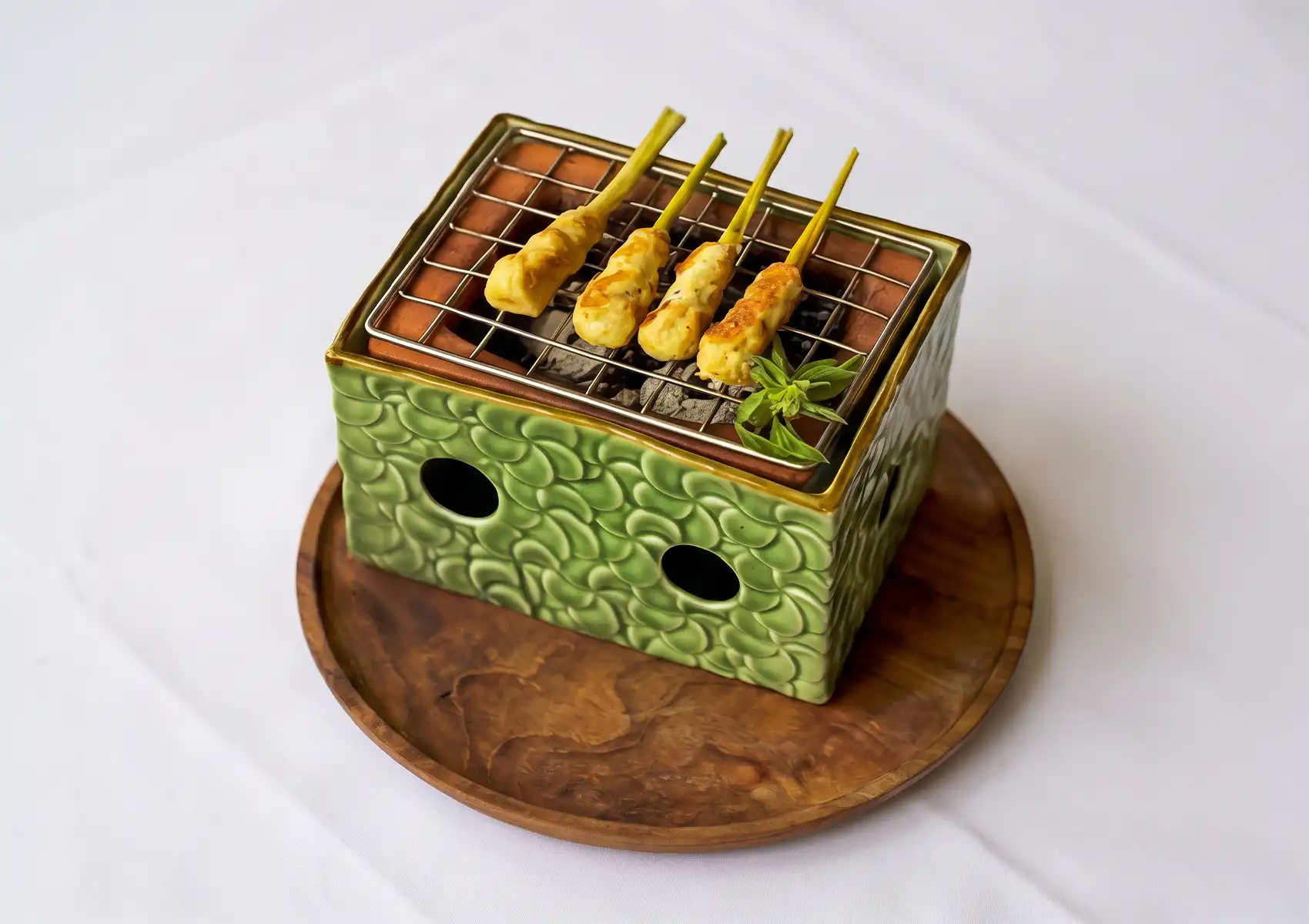
Sate Be Pasih with Balinese Rijsttafel Tradition
Sate Be Pasih Bali has been grilled over coconut charcoal along Bali’s coastlines for a long time before it found its way onto Ubud restaurants’s menus. That journey, from the fishing communities of Jimbaran and Kusamba inland to the valley tables of Ubud, is not incidental. It reflects something central to how Balinese cuisine has always moved: through ceremony, through offering, through the act of bringing the best of the island to a shared table. Understanding that context is what makes eating here feel like something more than an afternoon out.
What Is Sate Be Pasih
Before the grill, before the skewer, there is the fish. Sate Be Pasih begins with a sourcing decision that is deeply coastal in its logic, and understanding that origin is what separates a well-informed order from a fortunate one.
Sate Be Pasih translates from Balinese as fish satay, and it is a dish rooted in the fishing communities along Bali’s southern and eastern coastlines, particularly around Jimbaran, Kusamba, and the waters near Nusa Penida. It is built around chunks or fillets of seasoned fish skewered on a flat bamboo stick, carrying a distinctly coastal character in both texture and flavour that sets it apart from the ceremonial satay preparations more commonly found inland.
The fish selection is where traditional Balinese seafood satay earns its integrity. Freshness is not a preference here; it is a requirement. Fresh fish holds together differently from older catch, producing a satay with a clean, firm bite and a natural sweetness that no amount of spice can compensate for afterwards. Tuna, mackerel, and snapper are all common choices, each bringing its own depth to the finished dish.
What is Sate Be Pasih without its spice base? Incomplete. The dish relies on base genep, the foundational Balinese spice paste built from galangal, turmeric, lemongrass, shallots, garlic, and candlenuts. The exact composition shifts from one coastal region to the next and from one family kitchen to another, which is part of what keeps the dish so alive across generations. Grilled over coconut husk or wood charcoal, the smokiness that develops tempers the paste’s brightness in a way that feels entirely earned.
What is a Balinese Rijsttafel
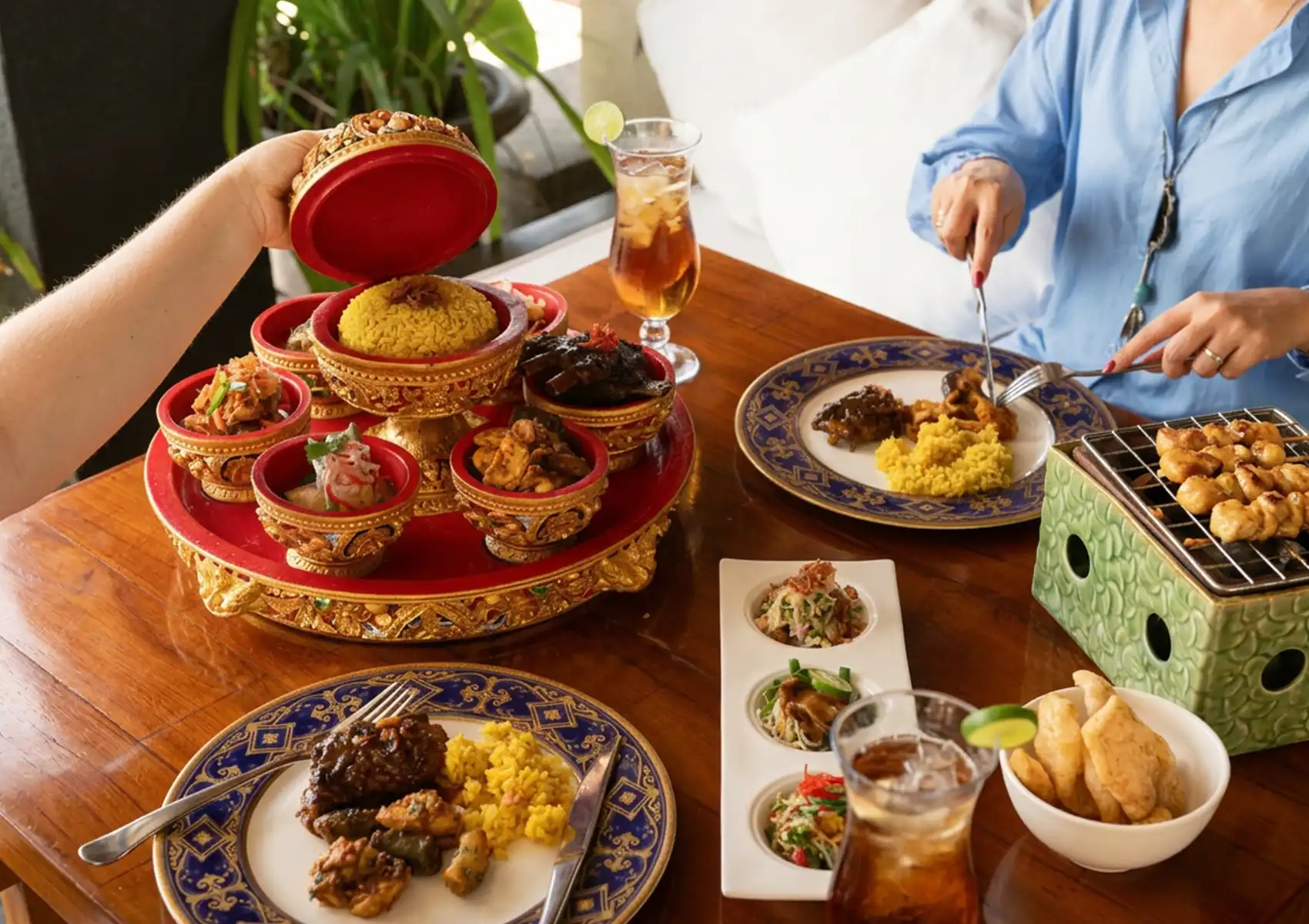
Few dining formats carry as much layered history as the Rijsttafel. To fully appreciate what you are sitting down to, it helps to trace the journey of this table from its colonial origins to its current form as part of Ubud’s best Balinese Rijsttafel.
The word Rijsttafel translates from Dutch as rice table, and the format was established during the colonial period as a way for Dutch residents to experience the breadth of Indonesian cuisine in a single sitting. Dishes from across the archipelago were arranged in sequence around a central mound of steamed rice. The framing was colonial, but the people who shaped and cooked those meals were always Balinese and Indonesian cooks drawing on their own knowledge, their own gardens, and their own fire.
In Bali, the format found particularly fertile ground because it mirrored something already deeply present. Balinese ceremonial feasting has long upheld a tradition of abundance: multiple dishes arrive together, each balancing spice, protein, vegetable, and sauce, with rice at the ceremonial centre. The Rijsttafel as practised at a restaurant in Ubud today draws far more from that ceremonial logic than from its colonial origins.
A well-constructed Balinese Rijsttafel typically spans eight to fourteen dishes, including slow-cooked duck or pork, lawar made with fresh coconut and herbs, sambals at varying levels of heat, sautéed water spinach, crisp crackers, and a rich broth to anchor the spread. Taken together, it is one of the more complete ways to understand Balinese flavour in a single sitting.
What to Look for in a Rijsttafel Worth Your Afternoon
Not every Rijsttafel is built with the same level of care. Quantity is the easiest thing to put on a table; balance and intention are considerably harder, and that difference becomes clear from the very first dish.
The best Balinese Rijsttafel that Ubud has to offer starts with the ingredients. The produce should reflect the local market and the season rather than a standardised supplier list. Balinese highland vegetables have a slightly earthy quality that is immediately noticeable when sourced well. Proteins should be prepared fresh on the day, not reheated to order.
Beyond ingredients, look at how the spread is composed. A meaningful Rijsttafel is not simply a collection of dishes placed side by side; it is a conversation between them, with contrasts in texture, temperature, and heat that keep the palate genuinely engaged from start to finish. Presentation tells you something, too. Dishes served in hand-painted earthenware, with garnishes that reflect the regional identity of each preparation, suggest a kitchen that regards this meal as a cultural offering rather than a formatted set menu. Pacing matters just as much. A Rijsttafel eaten in under an hour is a missed opportunity. The setting, the rhythm of service, and the space allowed between courses are as much a part of the experience as anything that arrives on the plate.
Experiencing Both at CasCades, A Restaurant in Ubud
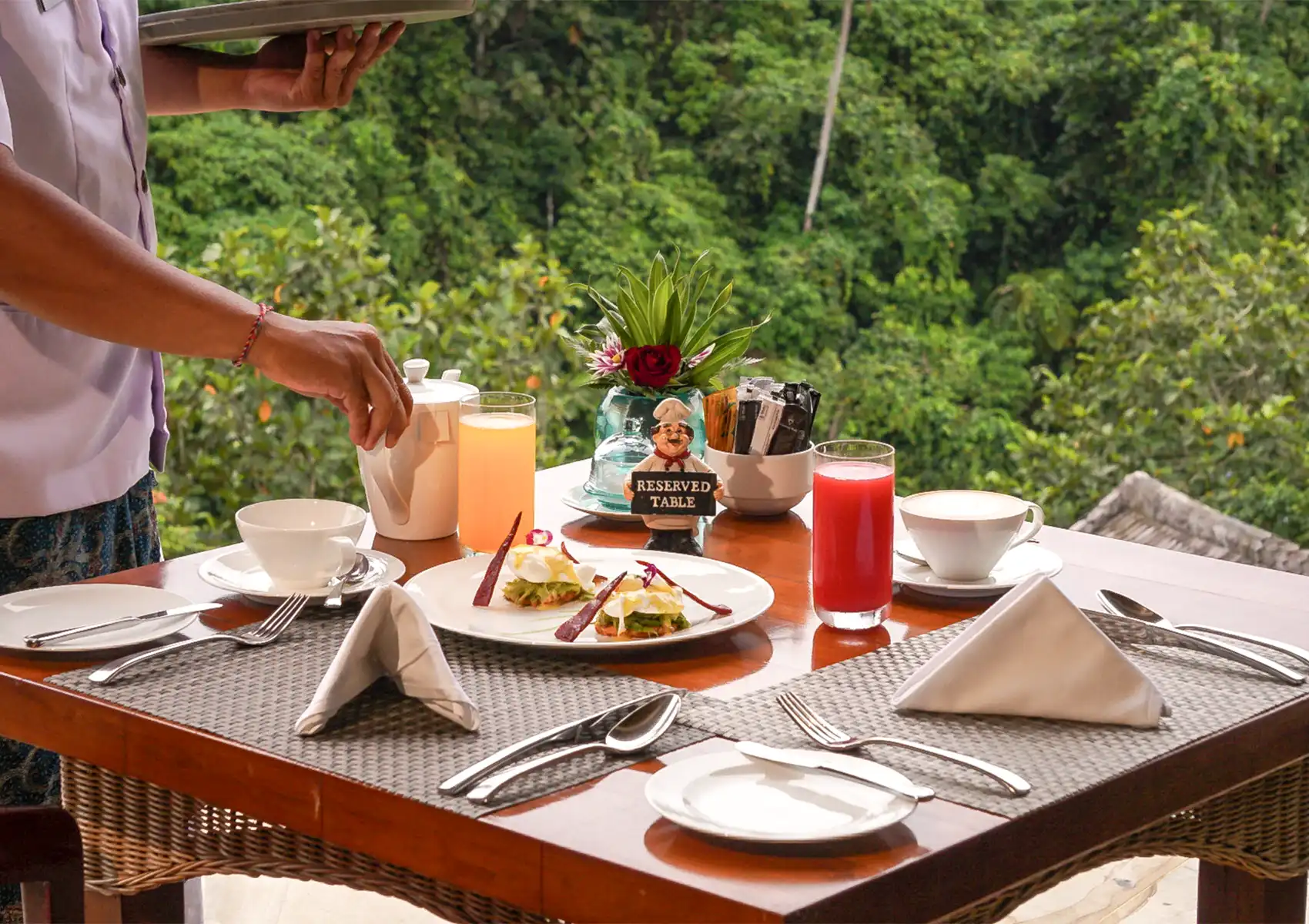
There are few places where Sate Be Pasih Bali and the best Balinese Rijsttafel Ubud have to offer share the same menu with equal conviction. CasCades, perched at the edge of the Valley of the Kings, is one of them.
Seated on the terrace with the jungle canopy spread out below and the sound of the river rising on the afternoon air, the setting at this restaurant in Ubud does something that few dining rooms manage: it makes the food taste more like itself. The surroundings are not decorative; they are part of the meal.
The Sate Be Pasih at CasCades is prepared with fish sourced through relationships with local suppliers who understand what freshness genuinely means in a Balinese context. The base genep is made in-house, ground and balanced by a kitchen team that treats the spice paste as a craft rather than a convenience. The satay arrives charred at the edges, with a gentle give at the centre, the smokiness meeting the spice in a way that recalls the dish’s coastal origins without any theatrical reimagining.
The Rijsttafel here is structured around the principles of Balinese ceremonial abundance. Dishes arrive in a considered sequence, each one prepared individually rather than batch-cooked, with rice at the centre acting as a quiet anchor for everything arranged around it. The pacing across a long lunch is deliberate. This is not a meal that rushes towards a conclusion; it is one that is allowed to breathe and unfold at its own pace.
A Table Worth Reserving
Balinese culinary heritage is not a backdrop. It is the reason to be at the table. At this restaurant in Ubud, both Sate Be Pasih Bali and the Rijsttafel are treated as the considered, layered traditions they are, not simply as items on a printed menu. If you are ready to engage with Balinese food on its own terms, reserve your table, browse the menu, and let the meal begin long before the first dish arrives.
Frequently Asked Questions
What is the difference between Sate Be Pasih and Sate Lilit?
Sate Lilit uses a minced fish paste wrapped around lemongrass or bamboo and is closely associated with Balinese temple ceremonies. Sate Be Pasih is built around chunks or fillets of seasoned fish on a flat bamboo skewer, giving it a firmer texture and a distinctly coastal quality that sets it apart.
How many dishes are in a Balinese Rijsttafel?
A traditional Balinese Rijsttafel typically includes between eight and fourteen dishes, spanning proteins, vegetables, sambals, crackers, and a broth, all arranged around a central rice preparation.
Where can I eat a traditional Rijsttafel in Ubud?
CasCades restaurant, overlooking the Valley of the Kings within Viceroy Bali, offers a carefully constructed Balinese Rijsttafel alongside traditional preparations such as Sate Be Pasih Bali.